
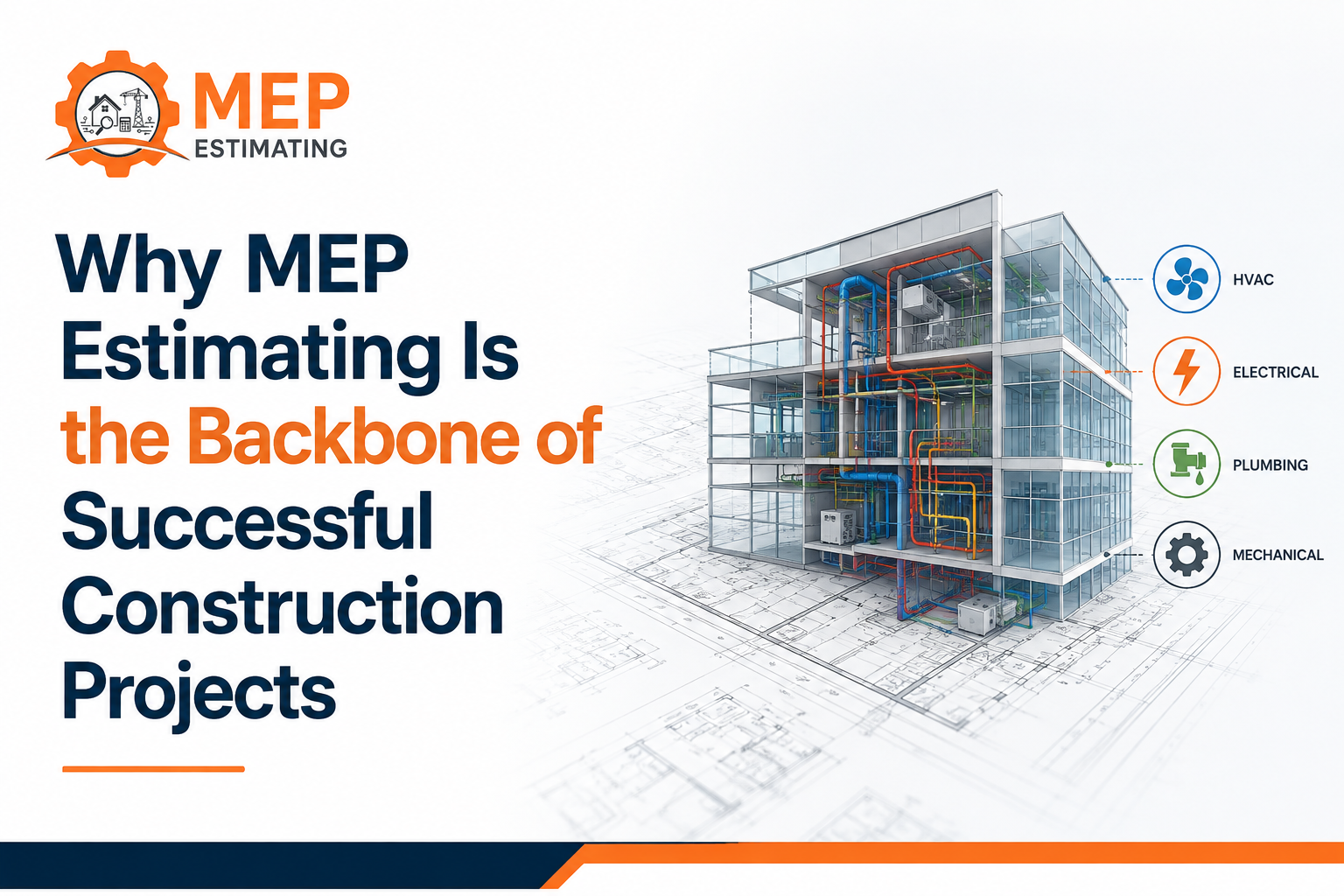
Modern construction projects rely on more than strong foundations and quality materials. The systems that provide heating, cooling, electricity, water, and fire protection are what make a building safe, efficient, and functional. These Mechanical, Electrical, and Plumbing (MEP) systems represent a large share of a project’s overall cost and require careful planning before construction begins.
This is why MEP estimating is one of the most important parts of the pre-construction phase. A well-prepared estimate helps contractors control costs, order the right materials, allocate labor efficiently, and submit competitive bids. In this guide, we’ll explore why MEP estimating is considered the backbone of successful construction projects and how it contributes to better project outcomes.
What Is MEP Estimating?
MEP estimating services involve calculating the expected costs for all mechanical, electrical, and plumbing work in a construction project. Estimators review project drawings, specifications, and design documents to determine material quantities, labor requirements, equipment costs, and other expenses before construction starts.
A detailed MEP estimate helps contractors understand the total project cost and prepare accurate budgets for bidding and execution.
Why MEP Estimating Is Essential for Construction Success
Creates Accurate Project Budgets
Every successful construction project starts with a realistic budget. Since MEP systems can account for a significant portion of construction costs, even small estimating mistakes can lead to budget overruns. An accurate estimate helps contractors
- Forecast total project costs
- Plan financial resources effectively
- Reduce unexpected expenses during construction
Improves Bid Accuracy
Winning bids require a balance between competitive pricing and profitability. Accurate MEP estimating allows contractors to submit bids that reflect the true cost of the project without unnecessary risk. This helps businesses:
- Avoid underbidding
- Prevent overpricing
- Increase confidence during tender submissions
Supports Better Material Planning
Material shortages or excess purchases can both increase project costs. MEP estimating provides detailed quantity takeoffs that help contractors purchase materials more efficiently. Accurate material planning also minimizes waste and reduces storage costs. Common items included are:
- Pipes and fittings
- Electrical conduits and wiring
- HVAC ducts and equipment
- Plumbing fixtures
Enhances Labor Management
Labor is one of the largest expenses in MEP construction. Estimating labor requirements before work begins allows project managers to schedule crews more efficiently. This improves productivity and reduces delays caused by poor workforce planning. A proper estimate helps determine:
- Required workforce
- Labor hours
- Installation timelines
Reduces Project Delays
Many construction delays occur because materials, labor, or equipment are not available when needed. A detailed MEP estimate helps contractors plan procurement and scheduling well in advance. As a result, projects benefit from:
- Timely material deliveries
- Better coordination between trades
- Smoother construction workflows
Controls Project Costs
Cost overruns often occur because of inaccurate estimates or incomplete project scopes. MEP estimating identifies potential cost risks before construction begins, allowing contractors to make adjustments early. This leads to:
- Better financial control
- Fewer unexpected expenses
- Improved profit margins
The Three Main Components of MEP Estimating
Mechanical Estimating
Mechanical estimating covers all heating, ventilation, air conditioning (HVAC), and other mechanical systems within a building. It calculates the materials, labor, equipment, and installation costs required for these systems, helping contractors plan budgets, manage resources, and ensure efficient system installation. It typically includes:
- Air ducts
- HVAC equipment
- Chillers and boilers
- Pumps
- Refrigerant piping
Electrical Estimating
Electrical estimating focuses on calculating the costs of power distribution and electrical installations within a building. It helps contractors estimate material quantities, labor requirements, and installation costs to ensure the electrical system is completed safely, efficiently, and within budget. Common components include:
- Conduits
- Electrical wiring
- Lighting fixtures
- Distribution panels
- Fire alarm systems
Plumbing Estimating
Plumbing estimating calculates the materials, labor, and installation costs required for water supply, drainage, gas, and sanitary systems. It helps contractors prepare accurate budgets, order the right materials, and ensure plumbing work is completed efficiently and in compliance with project specifications. Typical items include:
- Water supply piping
- Drainage systems
- Plumbing fixtures
- Valves
- Water heaters
The MEP Estimating Process
A professional MEP estimate is prepared through a systematic process that ensures every cost is accurately calculated before construction begins. Each step helps contractors create reliable budgets, reduce risks, and submit competitive bids.
Review Project Documents
Estimators study architectural, structural, and MEP drawings along with project specifications to understand the complete scope of work.
Perform Quantity Takeoffs
Every component is measured and quantified, including pipes, ducts, conduits, wiring, fixtures, equipment, and accessories.
Apply Material Pricing
Current supplier prices are assigned to each material item, taking market conditions into account.
Calculate Labor Costs
Labor hours are estimated based on installation methods, productivity rates, and project complexity.
Add Equipment and Other Costs
Additional costs such as lifts, machinery, permits, testing, temporary utilities, and overhead are included where applicable.
Prepare the Final Estimate
The estimate is compiled into a detailed report showing material quantities, labor costs, equipment costs, markups, and the total project value.
Common Challenges in MEP Estimating
Even experienced estimators face challenges that can affect project accuracy. Professional estimating practices help minimize these risks and improve project planning. Some common issues include:
Frequent Design Revisions
Construction drawings often change during the design phase. Even small revisions can affect material quantities, labor requirements, and overall project costs, requiring the estimate to be updated.
Fluctuating Material Prices
The prices of materials such as copper, steel, pipes, cables, and HVAC equipment can change due to market conditions and supply chain issues. Using outdated prices may lead to inaccurate estimates and reduced profit margins.
Incomplete Drawings
Missing details or unclear project drawings make it difficult to calculate accurate quantities and costs. Estimators may need to make assumptions, which can increase the risk of errors.
Tight Bidding Deadlines
Contractors often have limited time to prepare bids. Short deadlines can make it challenging to perform detailed quantity takeoffs and cost analysis, increasing the possibility of mistakes if the estimate is rushed.
Benefits of Professional MEP Estimating Services
Many contractors choose professional estimating services to improve accuracy and save time during the bidding process. These services help contractors focus on project execution while improving the quality of their estimates. Professional estimators provide:
Accurate Quantity Takeoffs
Professional estimators measure all MEP components, including pipes, ducts, conduits, wiring, fixtures, and equipment. Accurate takeoffs reduce material waste, prevent shortages, and ensure the right quantities are ordered.
Detailed Cost Reports
A detailed estimate includes material, labor, equipment, and overhead costs. These reports help contractors manage budgets, monitor expenses, and make informed decisions.
Faster Turnaround Times
Using advanced estimating software and efficient workflows, professional estimators deliver estimates quickly, allowing contractors to meet bid deadlines and bid on more projects.
Updated Material Pricing
Estimators use current supplier quotes and market rates to ensure material costs are accurate, helping contractors avoid pricing errors and protect profit margins.
Better Bid Preparation
Accurate estimates enable contractors to submit competitive and profitable bids with greater confidence, improving their chances of winning projects.
Industries That Benefit from MEP Estimating
MEP estimating is essential for almost every type of construction project. Regardless of project size, accurate estimating supports better planning and cost management.
- Residential developments
- Commercial buildings
- Healthcare facilities
- Educational institutions
- Industrial plants
- Hotels and hospitality projects
- Warehouses and distribution centers
Conclusion
MEP estimating is the foundation of successful construction planning. It helps contractors prepare accurate budgets, improve bid accuracy, manage materials efficiently, and reduce costly mistakes throughout the project lifecycle. At MEP Estimate, we provide reliable MEP estimating services that help contractors make informed decisions, maintain profitability, and complete projects on time and within budget.
