
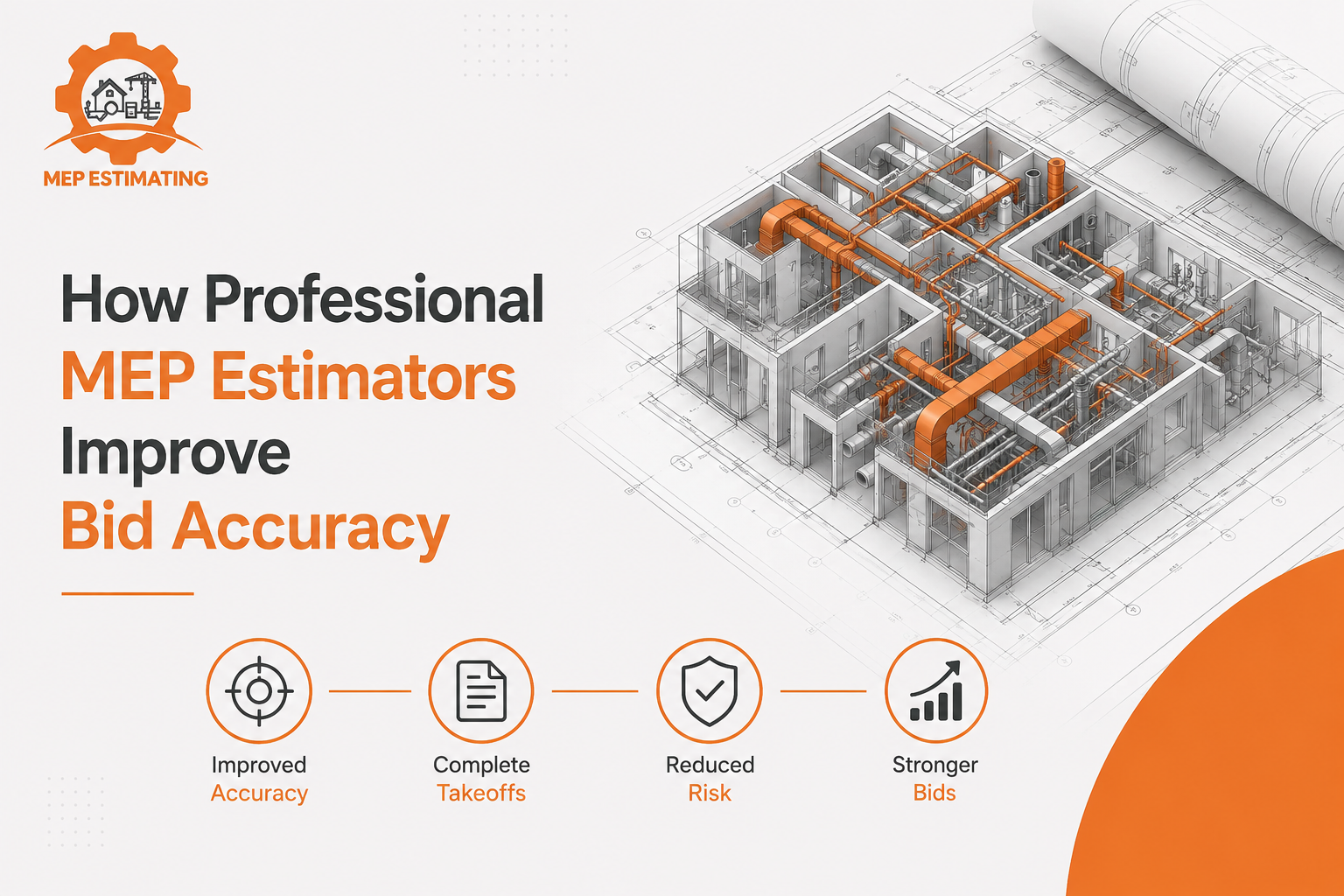
Preparing an MEP estimate can be challenging because every project includes hundreds of materials, labor tasks, and installation requirements that must be priced correctly. Contractors often work with tight deadlines, changing drawings, and fluctuating material costs, making it easy for important details to be missed.
This is where experienced MEP estimators make a difference. By reviewing project drawings, performing detailed quantity takeoffs, and using current pricing, they help contractors prepare reliable bids, control project costs, and reduce the risk of costly estimating errors.
How Accurate MEP Estimates Lead to Better Bids
Preparing an MEP estimate involves much more than calculating material and labor costs. Every quantity, installation requirement, and project specification must be reviewed carefully to develop realistic pricing. Missing even a small detail can affect the bid, increase project costs, or reduce profitability after construction begins.
A detailed MEP estimate helps contractors:
- Develop realistic and competitive bid pricing.
- Reduce the risk of overestimating or underestimating project costs.
- Base decisions on accurate quantity takeoffs and current material and labor rates.
- Bid on more projects with greater confidence.
- Improve their chances of winning profitable contracts while avoiding costly surprises.
Understanding the Role of Professional MEP Estimators
Professional MEP estimators specialize in analyzing construction plans to calculate the materials, labor, equipment, and installation costs required for mechanical, electrical, and plumbing systems. They understand industry standards, local building codes, and current material pricing, enabling them to produce highly accurate estimates. Their work provides contractors with reliable cost data before construction begins, reducing uncertainty during the bidding process.
How Quantity Takeoffs Reduce Costly Errors
One of the primary reasons professional estimators improve bid accuracy is through detailed quantity takeoffs. Accurate quantity takeoffs minimize material shortages, prevent unnecessary purchases, and ensure every cost is included in the estimate. They carefully measure every project component, including:
- HVAC ductwork and equipment
- Electrical wiring and conduit
- Lighting fixtures
- Switchgear and panels
- Plumbing pipes and fittings
- Fire protection systems
- Insulation materials
- Mechanical equipment
For example, a commercial office project may require thousands of feet of electrical conduit. If those quantities are measured incorrectly, the contractor could order too little material or submit a bid that doesn’t cover the actual installation cost. Carefully reviewing the drawings before bidding helps prevent these problems.
Using Current Material and Labor Pricing
Material prices rarely stay the same throughout a project, due to supply chain fluctuations and regional labor rates. Professional MEP estimators use updated pricing databases and current supplier information to create realistic cost estimates. This results in bids that are both competitive and financially realistic. Instead of relying on outdated pricing, they account for:
- Current material costs
- Local labor rates
- Equipment rental expenses
- Delivery charges
- Installation costs
- Regional pricing differences
Identifying Missing Scope Before Bidding
Many bid errors occur because important project requirements are overlooked. Finding these issues early allows contractors to request clarifications before submitting bids, reducing the likelihood of unexpected costs later. Professional estimators carefully review architectural, structural, and MEP drawings to identify:
- Missing information
- Design conflicts
- Incomplete specifications
- Coordination issues
- Scope gaps
Improving Labor Cost Accuracy
Labor often represents one of the largest expenses in MEP projects. Estimating labor incorrectly can significantly affect overall profitability. This detailed analysis produces labor estimates that closely match actual project requirements. Professional estimators evaluate factors such as:
- Project complexity
- Installation methods
- Crew productivity
- Site conditions
- Project schedule
- Overtime requirements
Supporting Competitive Bid Pricing
Winning bids require more than low prices. They require accurate prices. Accurate estimates give contractors the flexibility to remain competitive without underpricing their work. Professional MEP estimators help contractors:
- Submit competitive bids
- Protect profit margins.
- Reduce unnecessary contingencies
- Improve pricing confidence
- Increase bid consistency
Leveraging Advanced Estimating Software
Professional estimators use specialized software to improve speed and accuracy while reducing manual calculation errors. These tools allow estimators to perform digital takeoffs, organize quantities, and generate detailed cost reports more efficiently. Common estimating tools include:
- PlanSwift
- Bluebeam Revu
- FastPIPE
- FastDUCT
- Trimble Estimation
- AutoCAD
- Microsoft Excel
Reducing Change Orders During Construction
Inaccurate estimates often lead to unexpected costs and change orders after work begins. MEP estimators help reduce these issues by ensuring all project requirements are included during the bidding stage. More accurate estimates improve project planning and minimize costly surprises throughout construction.
Better Budget Planning for Contractors
Contractors can make better financial decisions when project costs are calculated before work begins. This improves overall project management while reducing financial risks. Accurate MEP estimates support:
- Cash flow planning
- Procurement scheduling
- Material purchasing
- Resource allocation
- Subcontractor coordination
- Financial forecasting
Costly Estimating Mistakes MEP Estimators Help You Avoid
MEP estimators reduce errors that commonly affect construction bids. Preventing these mistakes leads to stronger, more reliable bids.
Missing Materials
Overlooking required materials can increase project costs later and cause delays when additional items need to be purchased.
Incorrect Quantity Calculations
Errors in quantity takeoffs can result in ordering too much or too little material, affecting both costs and project schedules.
Outdated Pricing
Using old material or labor rates can make bids inaccurate and reduce profitability when actual costs are higher.
Labor Underestimation
Underestimating the time and workforce needed can lead to higher labor expenses and scheduling problems during construction.
Scope Omissions
Missing work items from the estimate may create unexpected costs, change orders, or disputes after the project begins.
Duplicate Cost Entries
Including the same material or labor cost more than once increases the bid amount and makes it less competitive.
Misinterpreted Drawings
Misreading plans or specifications can result in incorrect quantities, pricing errors, or missing project requirements.
Incomplete Bid Documentation
Missing supporting documents or estimate details can create confusion during bid evaluation and reduce client confidence.
How Outsourced MEP Estimating Supports Better Bidding
Many contractors outsource estimating because it provides access to experienced professionals without the expense of hiring a full-time estimating department. This approach is particularly beneficial during busy bidding seasons. Outsourcing offers several advantages:
- Faster turnaround times
- Reduced overhead costs
- Access to experienced estimators
- Improved bid accuracy
- Scalable estimating support
- More time to focus on project execution
What to Look for in an MEP Estimating Company
Choosing an experienced estimating partner helps ensure every bid is prepared with accuracy and attention to detail. When selecting an estimating company, contractors should look for the following:
- Extensive MEP estimating experience
- Knowledge of local building codes
- Accurate quantity takeoffs
- Current pricing databases
- Fast turnaround times
- Detailed reporting
- Responsive customer support
- Experience with residential, commercial, and industrial projects
Conclusion
Every estimate influences more than just the bid price. It also shapes budgeting, material purchasing, and overall project planning. When quantities, labor, and material costs are calculated correctly, contractors can bid with greater confidence, avoid costly surprises, and improve their chances of securing profitable work. With MEP Estimates, contractors gain reliable estimating support that turns detailed project data into smarter bidding and better cost control.
Frequently Asked Questions
How long does it take to prepare an MEP estimate?
The turnaround time depends on the size and complexity of the project. Smaller residential projects may take one to three business days, while large commercial or industrial projects can take several days or longer, depending on the scope and available drawings.
What documents are needed to prepare an MEP estimate?
Most estimators require construction drawings, MEP plans, project specifications, and any addenda or revisions. Providing complete and updated documents helps produce a more accurate estimate.
Can MEP estimates be updated if the project design changes?
Yes. If drawings or specifications are revised, the estimate can be updated to reflect changes in quantities, materials, labor, and overall project costs. This helps contractors keep their bids and budgets aligned with the latest design.
Who can benefit from MEP estimating services?
MEP estimating services are useful for general contractors, subcontractors, developers, engineers, architects, and project owners who need reliable cost information for budgeting, bidding, or project planning.
