
Mechanical, Electrical, and Plumbing (MEP) systems are some of the most complex parts of any construction project. A small estimating mistake can increase costs, delay the schedule, and reduce profit. That is why preparing an accurate MEP estimate is one of the most important steps before construction begins.
A detailed estimate helps contractors understand material requirements, labor costs, equipment needs, and the overall project budget. Many contractors also rely on MEP estimating services to prepare accurate estimates, reduce estimating errors, and submit competitive bids.
What Is MEP Estimating?
MEP estimating is the process of calculating the total cost of installing mechanical, electrical, and plumbing systems in a construction project. It involves measuring material quantities, estimating labor hours, calculating equipment costs, and preparing a complete project budget. A detailed estimate helps contractors plan projects more effectively and avoid unexpected expenses during construction.
A typical MEP estimate includes:
- Material quantities
- Labor costs
- Equipment costs
- Installation accessories
- Subcontractor costs
- Overhead and profit
- Contingency allowances
What Information Is Needed Before Estimating?
Before starting an estimate, contractors must collect all the information related to the project. Missing or outdated documents can result in inaccurate estimates and costly changes later.
Construction Drawings
Construction drawings provide the dimensions, layouts, and locations of all MEP systems. Estimators carefully review these drawings to understand the project’s scope. Using the latest drawings helps prevent estimating errors.
Project Specifications
Specifications explain the quality standards, approved materials, installation methods, and performance requirements for the project. Reviewing specifications ensures the estimate includes the correct products and installation procedures.
Scope of Work
The scope of work clearly defines what is included in the project. Understanding the complete scope helps prevent missing materials, labor, or specialized systems during estimating.
Project Schedule
Construction schedules affect labor planning and equipment requirements. Projects with tight deadlines may require additional workers or overtime, increasing overall project costs.
Current Pricing Information
Material and labor prices change frequently. Using updated supplier quotations and current labor rates helps contractors prepare more reliable estimates before submitting bids.
Step-by-Step MEP Estimating Process
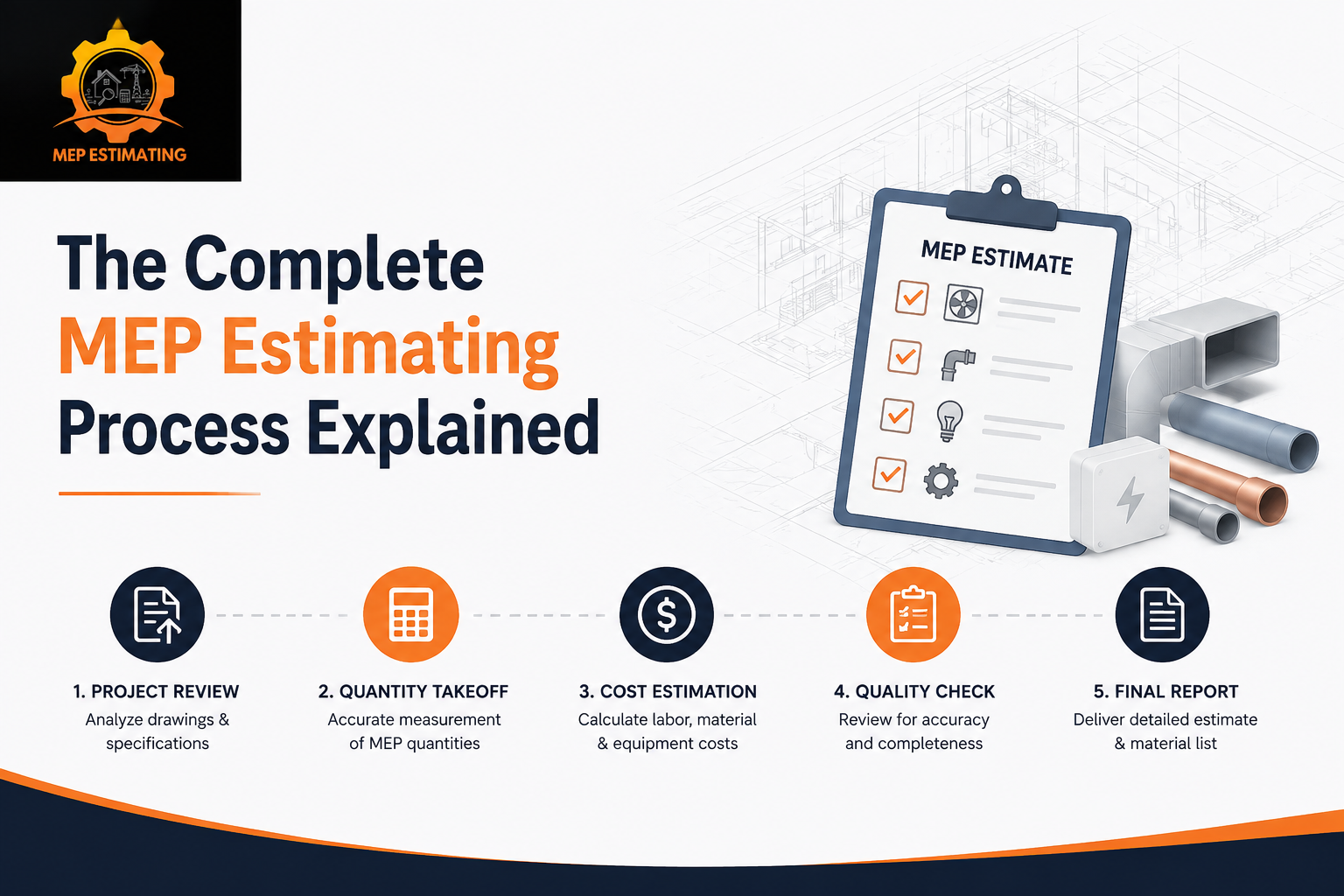
Accurate MEP estimating follows a structured process. Completing each step carefully helps contractors prepare detailed estimates and reduce financial risks.
Step 1: Review All Project Documents
The estimating process begins with reviewing every available project document. Understanding the project requirements before estimating reduces the chance of missing important information. This includes:
- Architectural drawings
- Mechanical drawings
- Electrical drawings
- Plumbing drawings
- Specifications
- Bid documents
- Addendums
Step 2: Define the Scope of Work
Once the drawings have been reviewed, the next step is identifying exactly what work needs to be completed. A clearly defined scope prevents misunderstandings during construction. The estimator determines:
- Which MEP systems are included
- Material requirements
- Installation responsibilities
- Equipment needs
- Project limitations
Step 3: Perform Quantity Takeoffs
Quantity takeoffs are one of the most important parts of MEP estimating. During this stage, estimators calculate the quantities of every material required for installation. Accurate quantity takeoffs reduce material shortages and improve budget planning. Depending on the project, this may include:
Mechanical
- Ductwork
- HVAC equipment
- Air diffusers
- Dampers
- Insulation
Electrical
- Conduit
- Wiring
- Lighting fixtures
- Panels
- Switches
- Breakers
Plumbing
- Pipes
- Valves
- Fittings
- Fixtures
- Drainage systems
- Pumps
Step 4: Calculate Material Costs
After completing the quantity takeoff, estimators assign current prices to every material. Using updated pricing and current labor cost information helps ensure the estimate reflects market conditions and reduces the risk of budget overruns. Contractors can also review construction labor cost data from the U.S. Bureau of Labor Statistics when evaluating labor expenses. Material costs are calculated using:
- Supplier quotations
- Local pricing
- Shipping costs
- Delivery charges
- Material waste allowances
Step 5: Estimate Labor Costs
After calculating material quantities, the next step is estimating the labor required to install each MEP system. Labor costs often make up a large portion of the total project budget, so accurate planning is essential. A realistic labor estimate helps contractors avoid overtime costs and keep projects within budget. Estimators consider several factors, including:
- Project size
- System complexity
- Crew size
- Labor productivity
- Site conditions
- Project schedule
Step 6: Include Equipment and Other Project Costs
Besides materials and labor, contractors must include the cost of equipment and other job-related expenses. Including these expenses creates a more complete and realistic project estimate. Common costs include:
- Lifts and scaffolding
- Power tools
- Heavy equipment
- Temporary utilities
- Safety equipment
- Material handling
- Transportation
- Permit fees
Step 7: Add Overhead and Profit
Every construction business has operating expenses that must be covered by each project. These indirect costs should be included before submitting the final bid. After calculating total project costs, contractors add a reasonable profit margin to ensure the project remains financially successful. Typical overhead costs include:
- Office expenses
- Insurance
- Vehicle costs
- Administrative staff
- Software subscriptions
- Business utilities
Step 8: Review and Finalize the Estimate
Before submitting the bid, every estimate should go through a final review. This step helps identify missing quantities, pricing errors, or calculation mistakes that could affect project profitability. A careful review increases confidence in the estimate and reduces the risk of costly errors after construction begins.
During the review, estimators should:
- Verify material quantities.
- Confirm labor calculations.
- Check supplier pricing.
- Review project drawings.
- Ensure all project costs are included.
Why Accuracy Matters Throughout the Process
Each step of the estimating process builds on the previous one. A small mistake made early, such as missing a quantity or using outdated pricing, can affect the entire project budget. Many contractors use MEP estimating services to ensure every stage of the estimating process is completed accurately and efficiently. Accurate estimating helps contractors:
- Reduce material waste.
- Improve budget planning.
- Submit competitive bids.
- Control project costs.
- Increase profit margins.
- Build client confidence.
Common Challenges in MEP Estimating
MEP estimating is more complex than many other types of construction estimating. Contractors often face challenges that can affect the accuracy of their estimates.
Frequent Design Changes
Construction drawings may change several times before a project begins. Design revisions can affect material quantities, labor requirements, and equipment costs. Using the latest drawings helps prevent estimating mistakes.
Changing Material Prices
The cost of ductwork, piping, electrical components, and HVAC equipment can change throughout the year. Regularly updating supplier prices helps contractors prepare more accurate estimates.
Complex Building Systems
Modern buildings include advanced mechanical, electrical, and plumbing systems that require careful coordination. Estimating these systems accurately takes time and technical knowledge. Breaking the project into smaller sections makes the estimating process more manageable.
Tight Bid Deadlines
Contractors often have limited time to prepare estimates. Rushing through drawings can result in missing quantities or incorrect pricing. Following a structured estimating process helps maintain accuracy, even under tight deadlines.
What Makes an MEP Estimate More Accurate?
Accurate estimates come from careful planning and attention to detail. A few simple practices can significantly improve estimate quality. A consistent estimating process reduces errors and improves bid accuracy. To prepare more reliable estimates:
- Review all project drawings carefully.
- Use the latest project documents.
- Perform detailed quantity takeoffs.
- Update material and labor pricing.
- Include equipment and indirect costs.
- Allow for waste and contingency costs.
- Double-check calculations before submitting the bid.
How Accurate MEP Estimates Benefit Your Project
A detailed MEP estimate does more than calculate project costs. It also improves planning, communication, and overall project performance. Accurate estimates give contractors greater control over every stage of the project.
Some key benefits include:
- More accurate project budgets
- Better material planning
- Improved labor scheduling
- Fewer unexpected expenses
- Reduced change orders
- Stronger and more competitive bids
- Better profit margins
- Increased client confidence
Why Contractors Outsource MEP Estimating
Preparing MEP estimates requires technical knowledge, current pricing information, and considerable time. As projects become more complex, many contractors choose to outsource their estimating work.
Professional MEP estimating services help contractors prepare accurate quantity takeoffs, detailed cost estimates, and bid-ready reports. Outsourcing also allows construction teams to focus on managing projects while experienced estimators handle the estimating process. Some of the biggest benefits include:
- Faster estimate turnaround
- Improved estimate accuracy
- Reduced estimating workload
- More time to bid on new projects
- Better cost control
- Increased chances of winning profitable projects
Conclusion
Accurate MEP estimating helps contractors plan projects, control costs, and avoid costly mistakes. From reviewing project documents to calculating materials, labor, and equipment, every step contributes to a reliable estimate. MEP Estimates helps contractors simplify this process with detailed estimating support, enabling them to improve accuracy, prepare competitive bids, and move forward with projects with greater confidence.
Frequently Asked Questions
What is included in an MEP estimate?
An MEP estimate includes material quantities, labor costs, equipment expenses, subcontractor costs, overhead, profit, and contingency allowances for mechanical, electrical, and plumbing systems.
Why is MEP estimating important?
MEP estimating helps contractors prepare accurate budgets, control project costs, reduce financial risks, and submit competitive bids before construction begins.
How long does it take to prepare an MEP estimate?
The time depends on the project’s size and complexity. Small projects may take a few days, while larger commercial projects can take longer.
What software is commonly used for MEP estimating?
Many estimators use software such as PlanSwift, Bluebeam Revu, FastPIPE, FastDUCT, Trimble, and Microsoft Excel to prepare detailed MEP estimates.
Why do contractors use MEP estimating services?
Contractors use MEP estimating services to save time, improve estimate accuracy, reduce estimating errors, and prepare competitive bids while focusing on project execution.
